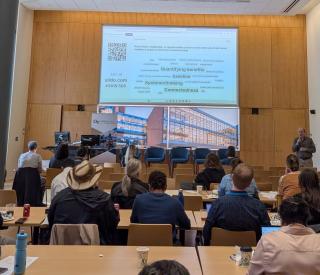
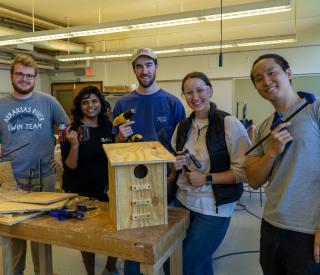
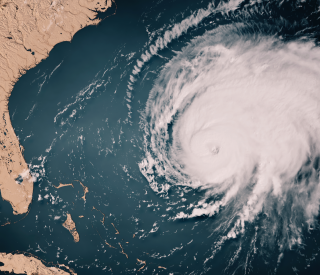
Across disciplines and scales, a unifying theme emerged: resilience is not a single solution. It is a systems-level challenge requiring integration across science and technology, policy, communities, and human experience.
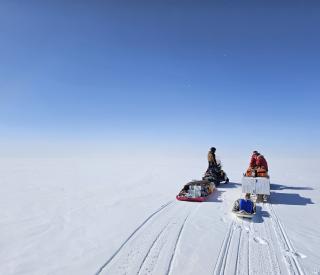
Rachel Moore spent nearly 50 days in one of the most remote places on Earth, collecting ice cores; the research has implications for climate change predictions and searching for signs of life on icy worlds.
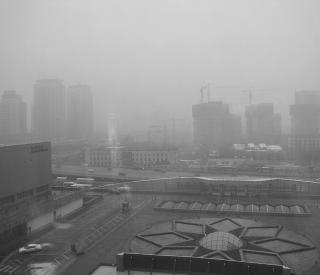
School of Earth and Atmospheric Sciences researchers find dangerous sulfates are formed, and their particles get bigger, within the plumes of pollution belching from coal-fired power plants.
The expanded undergraduate degree offerings are designed to continue Georgia Tech’s reputation for academic rigor — and also reflect trends in student interests, as well as current and forecasted needs in the job marketplace.
School of Computational Science and Engineering (CSE) Assistant Professor Peng Chen is co-principal investigator of a $1.5 million National Science Foundation grant to develop the CRIS-HAZARD system.
Led by School of Earth and Atmospheric Sciences Professor Greg Huey, the NSF RAPID grant is for analyzing air chemistry data collected during a three-week span when a chemical plume impacted the Atlanta area.
The interdisciplinary Environmental Science (ENVS) degree program, developed by faculty in the Schools of Earth and Atmospheric Sciences and Biological Sciences, is now enrolling students interested in a wide variety of environment-related careers.