Skip to main navigation Skip to main content
Georgia Institute of Technology

Sustainability at Georgia Tech

Main navigation

  • Home
  • Education
  • Research
  • Campus Sustainability
  • News

User account menu

  • Log in

Machine Learning Key to Proposed App that Could Help Flood-prone Communities

Sep 28, 2023
School of Computational Science and Engineering (CSE) Assistant Professor Peng Chen is co-principal investigator of a $1.5 million National Science Foundation grant to develop the CRIS-HAZARD system.

From Seafloor to Space: New Bacterial Proteins Shine Light on Climate and Astrobiology

Image
clathrate.jpg
Description

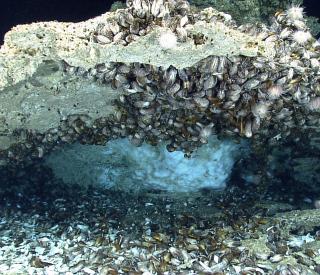
<p><span><span>Methane clathrate (white, ice-like material) under a rock from the seafloor of the northern Gulf of Mexico. Deposits such as these demonstrate that methane and other gases cross the seafloor and enter the ocean. Photo credit: NOAA</span></span></p>

Mercury ID
671833
Sep 26, 2023

Georgia Tech researchers have uncovered eco-friendly bacterial proteins that stabilize methane clathrates, offering a green solution to climate challenges and potential implications for astrobiology.

As Temperatures Climb, Flying Insects Slower to Migrate to Cooler Elevations

Image
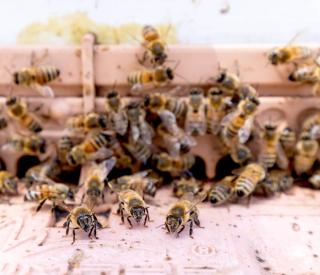
A close up of bees flying into a hive on the CU Denver campus.
Description

<p>A close up of bees flying into a hive on the CU Denver campus.</p>

Mercury ID
671675
Sep 11, 2023

In response to changing climates, many plants and animals are moving to higher elevations, seeking cooler temperatures. But a new study finds that flying insects like bees and moths may struggle with insurmountable issues to this escape route.

Echoes of Extinctions: Novel Method Unearths Ecosystem Disruptions

Image
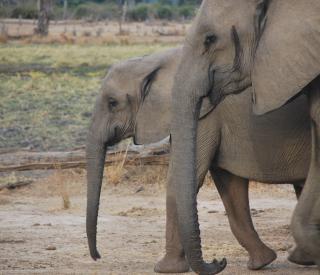
Profiles of two eastern African elephants walking side by side. (Photo: Jess Hunt-Ralston)
Description

<p>While most species have gone extinct, eastern Africa is home to vibrant natural communities of mammalian megafauna, including elephants, zebras, hippopotamuses, antelope, giraffes, and many others. (Photo: Jess Hunt-Ralston)</p>

Mercury ID
671625
Sep 07, 2023

Their novel approach showed how mammal traits evolved with changing environments and revealed factors that contributed to biodiversity loss.

Creating the Tools to Conserve Our Wildlife

Image
audiomoth
Description

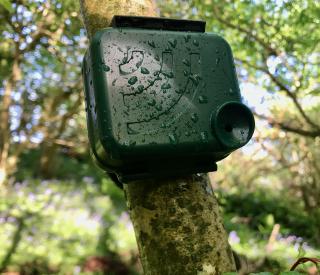
<p>An AudioMoth device in leafy environment. Photo credit: Andrew Hill.</p>

Mercury ID
671621
Sep 06, 2023

Scientists at the Georgia Institute of Technology and Max Planck Institute for Intelligent Systems in Stuttgart have published a perspectives piece on the different tools used throughout the world aiding in the conservation of wildlife and biodiversity.

Echoes of Extinctions: Novel Method Unearths Disruptions in Mammal Trait-Environment Relationships

Image
Profiles of two eastern African elephants walking side by side. (Photo: Jess Hunt-Ralston)
Description

<p>While most species have gone extinct, eastern Africa is home to vibrant natural communities of mammalian megafauna, including elephants, zebras, hippopotamuses, antelope, giraffes, and many others. (Photo: Jess Hunt-Ralston)</p>

Mercury ID
671625
Sep 06, 2023

Their novel approach showed how mammal traits evolved with changing environments over time and revealed factors that contributed to biodiversity loss.

Georgia Tech Making Waves in Tsunami Research

Image
Volcanic Tsunami Simulator
Description

<p>The volcanic tsunami simulator, developed by Georgia Tech researchers, gets a test run in an Oregon State wave basin.</p>

Mercury ID
671539
Aug 30, 2023

Researchers develop volcanic tsunami simulator to closely study potential natural disasters

Thinning Ice Sheets May Drive Sharp Rise in Subglacial Waters

Image
March 2, 2015: Image taken by the Operational Land Imager onboard Landsat 8. (NASA Earth Observatory)
Mercury ID
671437
Aug 21, 2023

Up to twice the amount of subglacial water that was originally predicted might be draining into the ocean – potentially increasing glacial melt, sea level rise, and biological disturbances.

Georgia Tech Researcher Leads $6 Million NASA Astrobiology Study

Image
FrankRosenzweig
Description

<p>Frank Rosenzweig, professor in the School of Biological Sciences</p>

Mercury ID
675131
Aug 14, 2023

NASA awarded $6 million to a research team led by Georgia Tech’s Frank Rosenzweig to study how compartmentalization drives evolution.

NSF RAPID Response to Earthquakes in Turkey

Image
Grad student Phuc Mach places a node
Mercury ID
671243
Jul 28, 2023

Zhigang Peng and graduate students Phuc Mach and Chang Ding are using small seismic sensors to better understand just how, why, and when certain earthquakes are occurring.

Pagination

  • Previous page ‹‹
  • 14 Page 14
  • Next page ››

Georgia Institute of Technology

North Avenue
Atlanta, GA 30332 +1 404.894.2000 Campus Map

  • General
  • Directory
  • Employment
  • Emergency Information
  • Legal
  • Equal Opportunity, Nondiscrimination, and Anti-Harassment Policy
  • Legal & Privacy Information
  • Human Trafficking Notice
  • Title IX/Sexual Misconduct
  • Hazing Public Disclosures
  • Accessibility
  • Accountability
  • Accreditation
  • Report Free Speech and Censorship Concern
Georgia Tech

© 2026 Georgia Institute of Technology

GT LOGIN