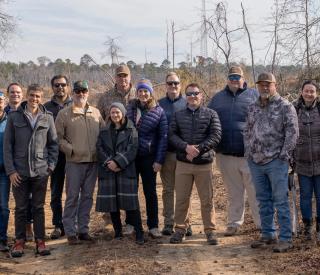
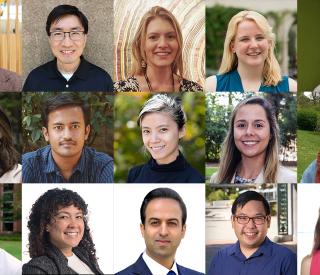
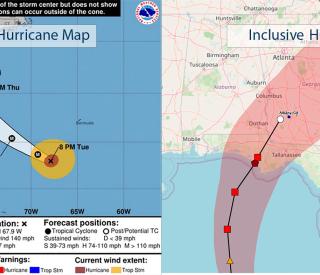
The Center for Inclusive Climate Communication (CICC) at Georgia Tech is a new and growing consortium of researchers, organizations, agencies, and companies whose goal is to ensure that climate and disaster information of all types is widely accessible.
Across disciplines and scales, a unifying theme emerged: resilience is not a single solution. It is a systems-level challenge requiring integration across science and technology, policy, communities, and human experience.
Georgia Tech’s Energy Policy and Innovation Center has collaborated with Dan Matisoff, EPIcenter’s faculty affiliate, to develop a new Sustainable Aviation Fuel Data Dashboard to provide clear, accessible insights into the rapidly evolving SAF market.
A new optimization technique could help conservation biologists choose the most cost-effective ways of connecting isolated populations of rare, threatened and endangered species living in protected areas.
A new study has found that La Niña-like conditions in the Pacific Ocean off the coast of Panamá were closely associated with an abrupt shutdown in coral reef growth that lasted 2,500 years.
Fish living on coral reefs where carbon dioxide seeps from the ocean floor were less able to detect predator odor than fish from normal coral reefs, according to a new study.