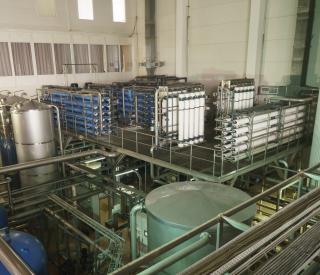
Membrane Technology Could Cut Emissions and Energy Use in Oil Refining
New membrane technology could reduce carbon emissions and energy intensity associated with oil refining.
Flies and Mosquitoes Beware, Here Comes the Slingshot Spider
Researchers have done what may be the first kinematic study of the slingshot spider, which catapults its web to catch insects.
Fossil Pollen Record Suggests Vulnerability to Mass Extinction Ahead
Reduced resilience of plant biomes in North America could be setting the stage for the kind of mass extinctions not seen in 13,000 years.
Georgia Tech Will Help Manage DOE’s Savannah River Laboratory
Georgia Tech is part of a team that has been selected to manage the DOE's Savannah River National Laboratory
Shuttering Fossil Fuel Power Plants May Cost Less Than Expected
A generator-level model suggests that most fossil fuel power plants could complete normal lifespans and still close by 2035.
Indoor Air Quality Study Shows Aircraft in Flight May Have Lowest Particulate Levels
A new study compares the level of particles in various indoor spaces, including aircraft cabins.
Restoring Power During Severe Storms
Researchers studied how recovery, guided by common policies from FEMA and industry, varies with respect to the severity of disruptive events.
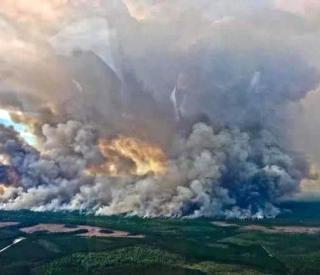
Protecting Rural Schoolchildren from Prescribed Fire Emissions
A new grant will allow Georgia Tech researchers to create strategies to protect schoolchildren from harmful wildland fire emissions
$12 Million NSF Grant Will Establish Nationwide Atmospheric Measurement Network
A multi-state network will measure aerosols to gain a better understanding of climate and public health.
Modeling Water-cleansing Wetlands in Extreme Weather
Georgia Tech is partnering with two Department of Energy (DOE) national laboratories to better understand how wetlands function, enabling scientists to better understand their role in controlling water quality.